Data Analytics
May 10, 2026
8 min read
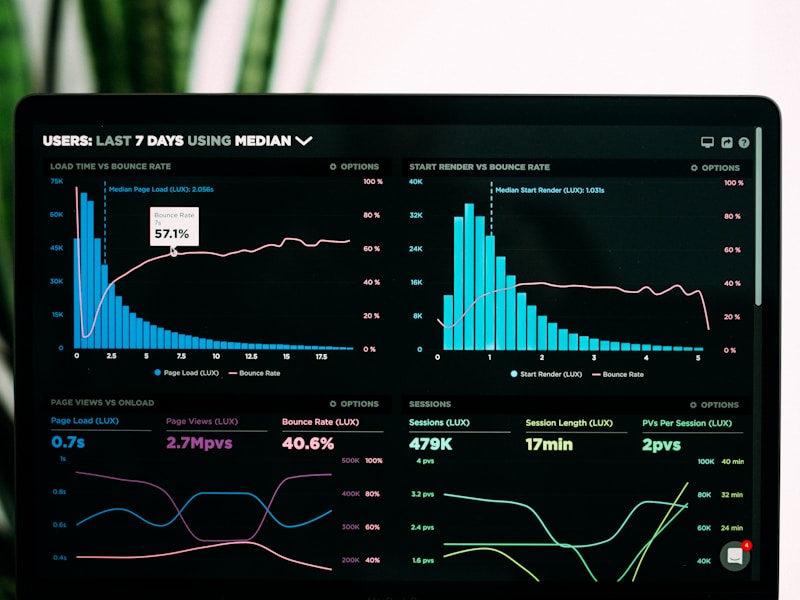
Mastering Power BI Dashboards for Remote Clients
Learn how to build interactive, real-time Power BI dashboards that impress international clients. From DAX formulas to row-level security, this guide covers everything you need.
Working with remote clients across different time zones and cultures has taught me one thing: data storytelling is universal. Whether you are presenting to a startup in Bangalore or an enterprise in Moscow, a well-crafted Power BI dashboard speaks louder than a hundred spreadsheets.
1. Understanding Client Requirements Before Touching Power BI
Before creating a single visual, I spend the first 30% of the project understanding what the client actually needs. For my international clients in Russia and the USA, this means:
- Identifying the KPIs that matter to their specific industry
- Understanding their existing data sources (SQL Server, Excel, APIs, or cloud warehouses)
- Defining the user personas — who will actually use this dashboard daily?
- Setting up proper communication channels for async feedback
2. Building the Data Model: The Foundation of Every Great Dashboard
A Power BI dashboard is only as good as its underlying data model. I follow the Star Schema approach religiously:
- Fact tables contain measurable data (sales, clicks, revenue)
- Dimension tables provide context (dates, products, customers, regions)
- Relationships are kept simple — one-to-many, always single-direction
For a recent client in the USA, I reduced their report refresh time from 8 minutes to 45 seconds simply by optimizing the data model and removing unnecessary bi-directional relationships.
3. DAX Formulas That Actually Matter
You do not need to memorize 500 DAX functions. Here are the 5 formulas I use in 90% of my dashboards:
CALCULATE() — for filtering and context modificationSUMX() — for row-by-row calculationsSAMEPERIODLASTYEAR() — for YoY comparisonsRANKX() — for dynamic ranking visualsDIVIDE() — safe division handling zero denominators
4. Row-Level Security (RLS) for Multi-Tenant Dashboards
When building for clients with multiple teams or regions, RLS is non-negotiable. I implement dynamic RLS using DAX filters tied to user email addresses, ensuring each stakeholder sees only their authorized data without needing separate reports.
5. Design Principles for Remote Presentation
Since my clients review dashboards asynchronously, I follow these design rules:
- Use a consistent color palette aligned with client branding
- Place the most important metric (the "hero number") at the top-left
- Add tooltips and smart narratives for self-explanatory insights
- Ensure mobile responsiveness — 40% of my clients check dashboards on phones
If you are looking to hire a Power BI developer in Parbatsar, Rajasthan who understands international client needs, get in touch.
Web Development
April 28, 2026
6 min read
Building Mobile-Responsive Websites with High Performance
A deep dive into Core Web Vitals, lazy loading, image optimization, and responsive design patterns that keep users engaged and Google happy on every device.
In 2026, over 65% of web traffic in India comes from mobile devices. If your website is not mobile-first, you are losing more than half your potential customers. As a freelance web developer serving clients in India, Russia, and the USA, I have learned that performance is not a feature — it is the foundation.
1. Core Web Vitals: The Three Metrics That Matter
Google uses three Core Web Vitals as ranking signals. Here is how I optimize each one:
- LCP (Largest Contentful Paint) — Keep under 2.5s. I use Next.js Image component with WebP/AVIF formats, and preload hero images.
- INP (Interaction to Next Paint) — Keep under 200ms. I minimize JavaScript bundles, use code splitting, and defer non-critical scripts.
- CLS (Cumulative Layout Shift) — Keep under 0.1. I always define width and height attributes on images and reserve space for dynamic content.
2. Responsive Design Patterns I Use Daily
Forget pixel-perfect mockups. I design using these fluid patterns:
- Container Queries — Components adapt based on their parent container, not just viewport width
- CSS Grid + Flexbox — For complex layouts that reflow naturally across breakpoints
- Clamp() for typography —
font-size: clamp(1rem, 2.5vw, 1.5rem) scales text smoothly
- Mobile-first CSS — Base styles target mobile; media queries enhance for desktop
3. Image Optimization: The Biggest Performance Win
Images account for 60-80% of page weight. My optimization stack:
- Serve WebP/AVIF with JPEG fallbacks
- Use responsive images with
srcset and sizes
- Implement lazy loading for below-the-fold images
- Use a CDN (Cloudinary/AWS CloudFront) for global delivery
For a recent e-commerce client, these optimizations reduced their mobile page load time from 4.2s to 1.1s — and their bounce rate dropped by 35%.
4. Testing on Real Devices
Chrome DevTools is great, but nothing beats testing on actual devices. I maintain a testing pool of 8 devices ranging from a budget Xiaomi Redmi to an iPhone 15 Pro. This ensures my websites work flawlessly for users in Parbatsar and beyond, regardless of their device or network speed.
Need a fast, mobile-responsive website built by a developer in Parbatsar, Rajasthan? Let's discuss your project.
Freelancing Tips
April 15, 2026
10 min read
How to Structure Freelance Contracts for Foreign Clients
Protect your work and get paid on time. This guide covers milestone-based payments, IP clauses, timezone communication, and legal considerations for cross-border freelancing.
After 3+ years of freelancing for clients in India, Russia, and the USA, I have learned that a good contract is worth more than a great portfolio. It protects your income, defines boundaries, and sets professional expectations from day one.
1. Always Use Milestone-Based Payments
Never agree to "pay on completion" for projects over $500. My standard structure:
- 30% upfront — Before writing a single line of code
- 40% at midpoint — Upon delivery of a working prototype or beta
- 30% on final delivery — After client approval and handover
This structure saved me from a $2,000 loss when a USA client ghosted mid-project. Because I had already received 70%, the financial damage was minimal.
2. Intellectual Property (IP) Clauses
Be explicit about who owns what:
- Source code ownership transfers only after final payment
- I retain rights to reusable components and libraries I build
- Client gets full ownership of custom business logic specific to their domain
- I reserve the right to display the project in my portfolio (unless NDA applies)
3. Timezone Communication Strategy
Working with a client 10 hours behind you requires discipline. My rules:
- Define overlapping hours — even 2 hours of sync time per week helps
- Use async communication — detailed Loom videos, written updates, and timestamped screenshots
- Set response time expectations — I promise 24-hour response, not instant replies
- Use scheduling tools like Calendly that auto-convert timezones
4. Currency & Payment Methods
For international clients, I recommend:
- USD invoicing for USA clients (avoids currency fluctuation disputes)
- Wise (TransferWise) for low-fee international transfers
- PayPal as a backup, but factor in their 4-5% fees
- Crypto (USDT) for Russian clients facing banking restrictions
5. The "Scope Creep" Defense
Scope creep is the #1 profit killer. I include this clause: "Any feature not listed in Appendix A is considered out-of-scope and will require a separate change request with revised timeline and pricing." This single sentence has prevented dozens of "small favor" requests that would have cost me 20+ hours of unpaid work.
If you are a freelancer in Rajasthan looking to work with international clients, or if you need a reliable web developer for your project, contact me here.